
Overview
Jira's strength is agile software development: backlogs, sprints, issue workflows. That model doesn't map to weighted work-breakdown structures, material requisitions, or field reports from a site with no signal.
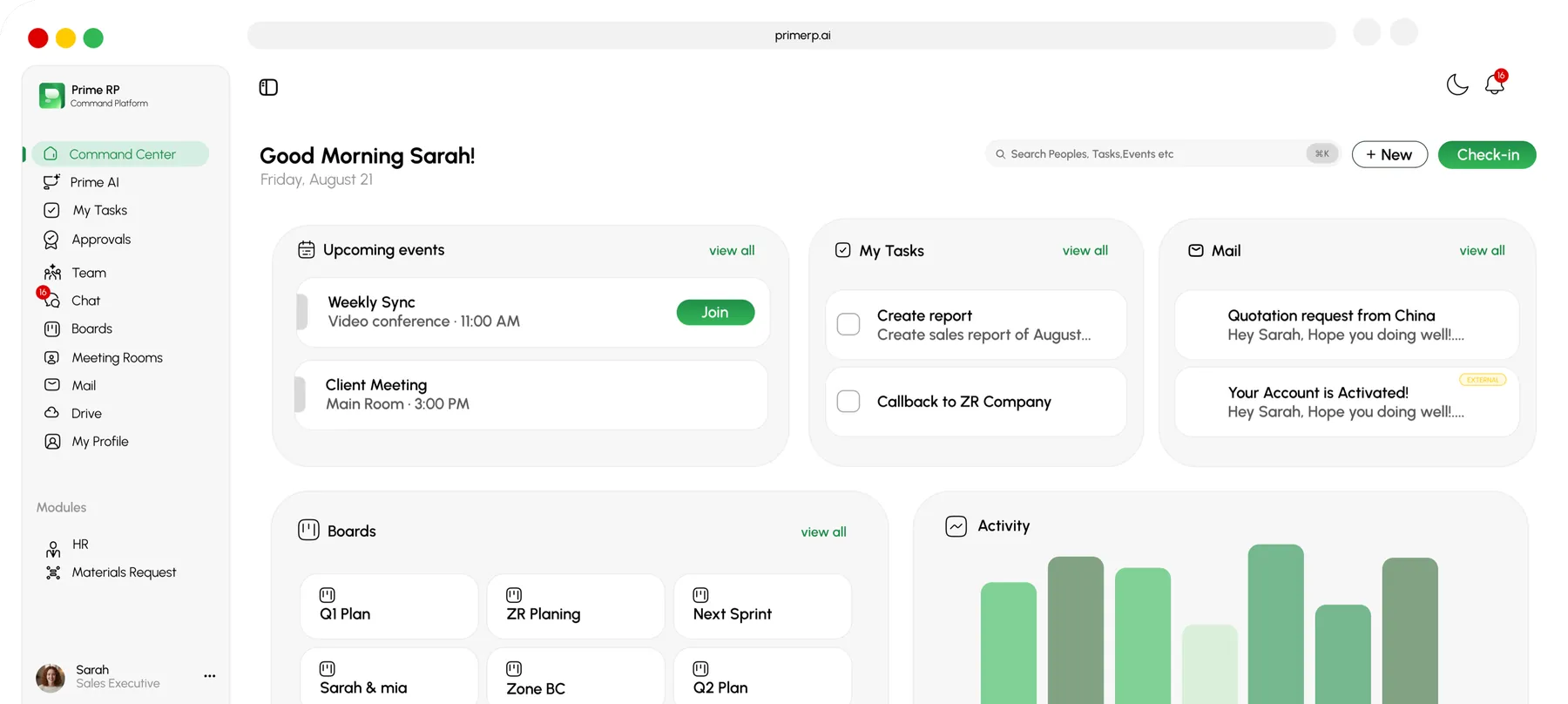
Prime RP is built around that different shape of work, with approvals, procurement, and field operations native to the platform alongside chat and video.
Where Prime RP wins
The difference is sharpest for physical, field-based work rather than software delivery.
- Weighted, sequence-aware progress purpose-built for construction-style work-breakdown structures.
- Material requisitions that commit budget the moment they're approved.
- Offline field reporting with photo, video, and audio evidence.
- Per-request-type approval routing with SLAs across HR, procurement, and more.
Where Jira still makes sense
For software development teams running sprints and tracking issues, Jira's agile tooling and developer ecosystem remain a strong, purpose-built fit.
Feature-by-feature
| Capability | Jira | Prime RP |
|---|---|---|
| Weighted WBS progress | No | Built-in |
| Material requisitions tied to budget | No | Yes |
| Offline field reporting | No | Native |
| Agile sprints & issue tracking | Yes | Not the focus |
| Chat & video built in | Separate tools | Native |
The verdict
Jira remains the right tool for software teams running agile sprints. For construction, EPC, and field operations, Prime RP is built for that physical, budget-aware, field-based shape of work instead.